简体中文
简体中文 English
 繁体中文
繁体中文 Deutsch
After receiving the dual-servo power head, don't rush to load it — the break-in step is crucial
Published:
2026-08-07
First, let‘s explain why the break-in of a dual-servo power head is more demanding than that of a traditional power head. A dual-servo power head has two servo motors each handling their own task — one controls spindle r
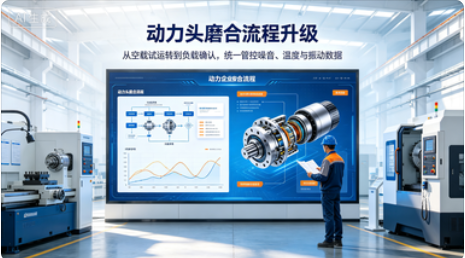
First, let's explain why the break-in of a dual-servo power head requires more attention than that of a traditional power head. A regular single-motor power head has a relatively simple structure—once the transmission chain runs smoothly, it's basically fine. But a dual-servo power head has two servo motors each handling their own part: one controls spindle rotation, the other controls feed motion. The synchronization accuracy, response matching, and acceleration/deceleration coordination between the two all need to gradually stabilize under real working conditions. The parameters you get on the factory test bench are under standard conditions. Once the machine reaches the customer's workshop, where clamping rigidity, workpiece material, ambient temperature, and coolant concentration are all different, the system needs a low-load adaptation period. That adaptation period is the break-in.
Before break-in, there are a few things you must confirm—don't skip them.
Once the equipment arrives, don't power it on right away. Clean the mounting surface, and use a level or dial indicator to re-check the flatness and perpendicularity of the mounting plane. Even with the best packaging, after hundreds or thousands of kilometers of bumps during transport, the preload state of the base will shift somewhat. Every dual-servo power head we ship has undergone runout inspection and load testing before leaving the factory, but that inspection baseline is from our factory's test platform. Once it's at your site, the reference surface changes, so you'll feel uneasy without re-checking. Also, open the gearbox inspection cover to check the oil level and confirm there's no leakage during transport. Don't get the grease type wrong either—the spindle bearings and feed screw use different types. The documentation in the accessory bag explains this; just flip through it, it takes two minutes.
Next is the no-load run-in. I recommend no less than two to three hours for this step.
How exactly do you run it? Start the spindle at 20% of rated speed, run for about fifteen minutes, listen to the sound and feel the temperature. If there's no issue, increase it gradually, adding 15% to 20% each time—don't jump straight to top speed. For the feed axis, do low-speed short-stroke reciprocating motion simultaneously to let the screw and nut pair break in. One more thing here: during no-load run-in, it's best not to walk away. Use a temperature gun every ten minutes to measure the bearing housing and gearbox casing. The temperature rise should normally not exceed 25°C above ambient. If a spot suddenly jumps to 40–50°C, stop the machine immediately—it's most likely inadequate lubrication or residual stress from assembly. If you keep running it, the bearings will be ruined.
Once no-load is fine, the next stage is light-load, which takes a bit longer—normally three to five working days.
At this stage, you can start cutting workpieces, but you must keep the cutting parameters low. Our recommendation is to start with depth of cut and feed at 40% to 50% of normal values, and keep spindle speed at 60% to 70% of rated. I know many customers are rushing to meet deadlines and think break-in is a waste of time, but think about it—the gear pair meshing surfaces inside a dual-servo power head have machining textures at the microscopic level, and the bearing rollers and raceways also need to form a stable oil film under real load. These things can't be solved by reading the manual; they require time and working conditions to wear in. If you skip these three days now, you'll face spindle precision degradation, declining positioning repeatability, and increasingly loud gear noise later. The loss from one repair shutdown is far greater than these three days.
During light-load break-in, there's another thing that's easy to overlook: observing the synchronization parameters of the dual servos. Under cutting force, the two servo systems will have slight following errors. The drive and PLC will do adaptive compensation, but this compensation takes time to converge. During these days, you can pay attention to the surface quality of the machined parts. If the surface finish is mediocre in the first two days but noticeably improves by the fourth or fifth day, it means the system is moving toward stability—that's normal. If there's no improvement or it even worsens, there may be a parameter matching issue. Contact our technical team to remotely check the drive's gain settings.
Don't stop routine inspections during the break-in period.
Before starting the machine each day, spend two to three minutes checking the oil level, listening for abnormal noises, and checking whether cable connectors are loose. Especially in the first week, thermal expansion and contraction plus slight vibration can cause terminal block screws to back out with a very small probability. It's unlikely, but if it happens, it could mean encoder signal loss or poor power line contact, triggering alarms and stopping production. Also, if the workshop environment has a lot of dust and metal chips, make sure the protective covers are tightly closed and the guideway bellows aren't left open. If dirt gets in, it's no longer break-in—it's wear. The nature is completely different.
After the break-in period is complete, perform a minor maintenance service.
After approximately 50 to 80 hours of cumulative operation, drain the gearbox oil and replace it with fresh oil. The oil from the break-in period will contain trace amounts of metal particles, which are a normal byproduct of gear surface seating. The quantity is very small and does not affect performance, but if left uncleaned and allowed to continue circulating, it becomes a lapping compound that accelerates gear wear. Also wipe off the old grease on the feed rails and reapply fresh grease. Once these steps are done, you can gradually raise the cutting parameters to normal values and move into regular production.
One more thing to add — if you're using our dual-servo drilling power head or dual-servo tapping power head, the break-in focus will be slightly different. For the drilling power head, the main focus is on the axial rigidity of the feed axis and the radial runout of the spindle. For the tapping power head, since it involves frequent forward/reverse switching and pitch synchronization, pay more attention to reverse response and torque fluctuation during break-in. The tapping power head follows a similar principle — the load changes significantly at the moment the tap engages and exits, so don't set the feed rate too fast during break-in; let the synchronous axis first smooth out the reversal response. These details are all covered in the commissioning manual included with the machine, but if your on-site conditions are special — for example, the material being machined is particularly hard or sticky — we recommend using more conservative break-in parameters, or simply contact us directly and we'll help you develop a break-in plan based on your specific working conditions.
We've been making power heads for many years, from the early mechanical power heads to today's servo power heads and dual-servo drive structures. Our products have gone through several iterations, but one thing has never changed: delivering the equipment isn't the end — the customer using it well is what counts. The break-in phase may seem insignificant, but it determines the precision retention and failure rate of your power head for the next three to five years or even longer. We'd rather spend extra time making sure you fully understand the break-in process than deal with after-sales calls every day about problems that could have been avoided.
So, if your dual-servo power head has just arrived at the factory, or you're preparing for installation and commissioning, save this article and follow it step by step. If you encounter anything you're unsure about, don't guess on your own — it's just one phone call away, and our technical team is always available. Once your equipment runs stably, your production capacity goes up, and our reputation is solidified — it's a win-win.
For more information on dual-servo power head and servo power head selection, configurations, and technical specifications, our official website's product pages have detailed introductions. Feel free to browse anytime, or visit our factory to see the machines in person and run test cuts.
Tags:
Related News


© 2012-2026 Shenzhen Chuanneng Automation Co., Ltd. All rights reserved. ICP License: 2026080421